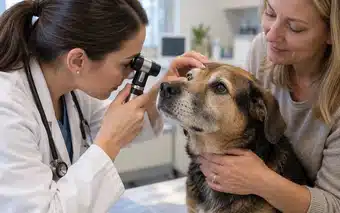
Emergency presentation
Possible services
Exam, stabilization, lab work
Policy question
Is the emergency event eligible?

A bowel-obstruction claim can contain diagnostics, emergency stabilization, surgery and hospitalization—each tied to the condition history and policy.
Use these checkpoints to frame the literal question before reading the full guide.
Pet insurance may reimburse bowel-obstruction surgery when the obstruction and related services are eligible under the current policy. Review when the symptoms began, whether the obstruction could be linked to prior or repeated foreign-body ingestion, and how the policy treats emergency care. Then audit imaging, endoscopy or laparotomy, bowel resection if required, anesthesia, hospitalization and medications as separate expense categories.
The sections below show how to verify the answer and what can change it.
Merck Veterinary Manual describes gastrointestinal obstruction in small animals as an emergency condition whose diagnosis can involve imaging and whose treatment can range from supportive care to endoscopic or surgical intervention. Insurance review should therefore begin with the first symptoms and diagnostic workup, not with a generic “surgery” label.
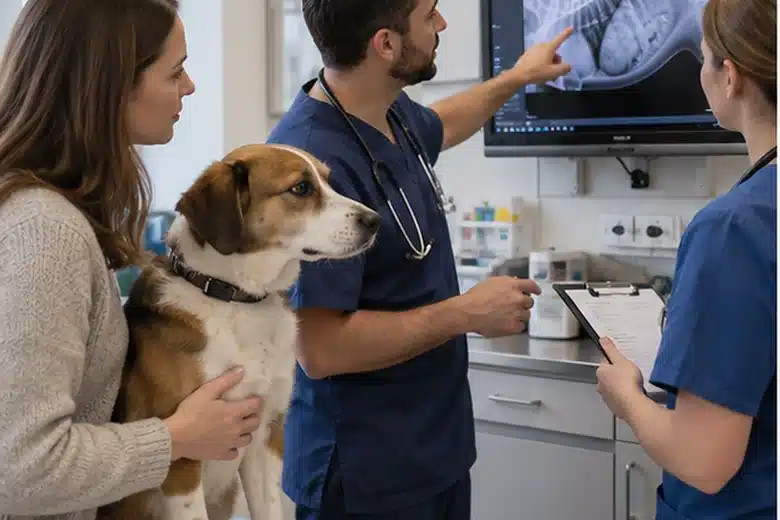
Suspected obstruction can be urgent. Do not delay veterinary evaluation while trying to predict insurance coverage; document the care and review the policy in parallel.
| Stage | Possible services | Policy question |
|---|---|---|
| Emergency presentation | Exam, stabilization, lab work | Is the emergency event eligible? |
| Diagnosis | Radiographs, ultrasound or other imaging | Are diagnostic services eligible? |
| Removal/treatment | Endoscopy or laparotomy | Which procedure was actually performed and is it eligible? |
| Complex surgery | Bowel resection/anastomosis if needed | Does the policy treat the added surgical work separately? |
| Hospitalization | Monitoring, fluids, medication | Are inpatient and medication charges eligible? |
Keep policy terms, deductible, reimbursement and limits beside the quote so the comparison stays consistent.
If the pet has had prior foreign-body ingestion or obstruction, do not assume a new episode will be treated exactly like the first. Preserve the earlier records and read any exclusion or condition-specific language that could apply. The clinical similarity between two events does not itself decide the insurance outcome.
Show the diagnostic evidence and sequence.
Identifies whether endoscopy, laparotomy or resection was performed.
Separates surgery, anesthesia, hospitalization, medication and diagnostics.
Document aftercare and complications.
No. Coverage depends on the policy, timing, history and actual services.
They are different procedures and can create different invoice items; verify the policy for the service actually performed.
Prior similar events can matter to the policy analysis. Keep the earlier medical records and review any relevant exclusion.
Keep the policy terms beside the price, then continue to rates when the comparison is clear.